
SNICKET is a digital exhibition platform. We help curators, creators, and anyone with a history to tell their stories.
-

Introduction
-

Before 1929: The Arrival of Picture Politics

-


Irishmen!
-
You Like Them Then! Vote for Emmott and Runciman
-
After the War
-
The Workers Burden
-
The Poor Man’s Burden
-
The Only Hope is Tariff Reform
-
-
The Poster Elections of 1910
-
Save the Children from Tariff Reform
-
The Glutton
-
Our Old Nobility
-
The Land Needs Labour
-
-
Sir Francis Carruthers Gould (1844-1925)
-
Baiting the ‘Dear Food’ Hook
-
-
John Hassall (1868-1948)
-
Electors Don’t Try the Impossible
-
It’s Labour vs the Rest
-
-
Gerald Spencer Pryse (1882-1956)
-
Mothers Vote Labour
-
-
1929-1950: Women and Leaders
-
Safety First
-
General Manager Wanted
-
-
Leaders: Presidential Politics
-
I am Voting Labour
-
Secure Industrial Prosperity
-
-
Gender Stereotypes
-
Men and Women Workers, Your Chance at Last
-
Labour Stands For All Who Work
-
-
The Sun
-
1950-1979: More Photos, Less Drawing, Fewer Words
-
Shopping Basket
-
The Political Pipe
-
After 1979: Labour Isn’t Working and its Aftermath
-
Satire
-
Colour
-
Do Posters Work?

Suggested Donation Levels
Congratulations!
You scored:
x
x
What have you learned?
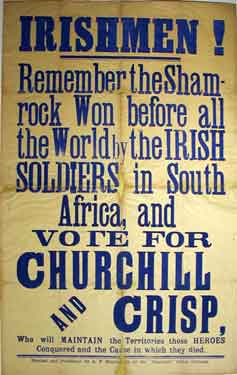
Irishmen!
In 1900 the election issue of the day was the ongoing Boer War. In this poster the Conservative party candidates Winston Churchill and Charles Crisp appeal to the Irish vote of Oldham. The poster is typical of a type from the first half of the 20th century. It is cheaply printed on poor quality paper. Because of the low quality paper and ephemeral nature of posters few of these early letter-press posters survive.



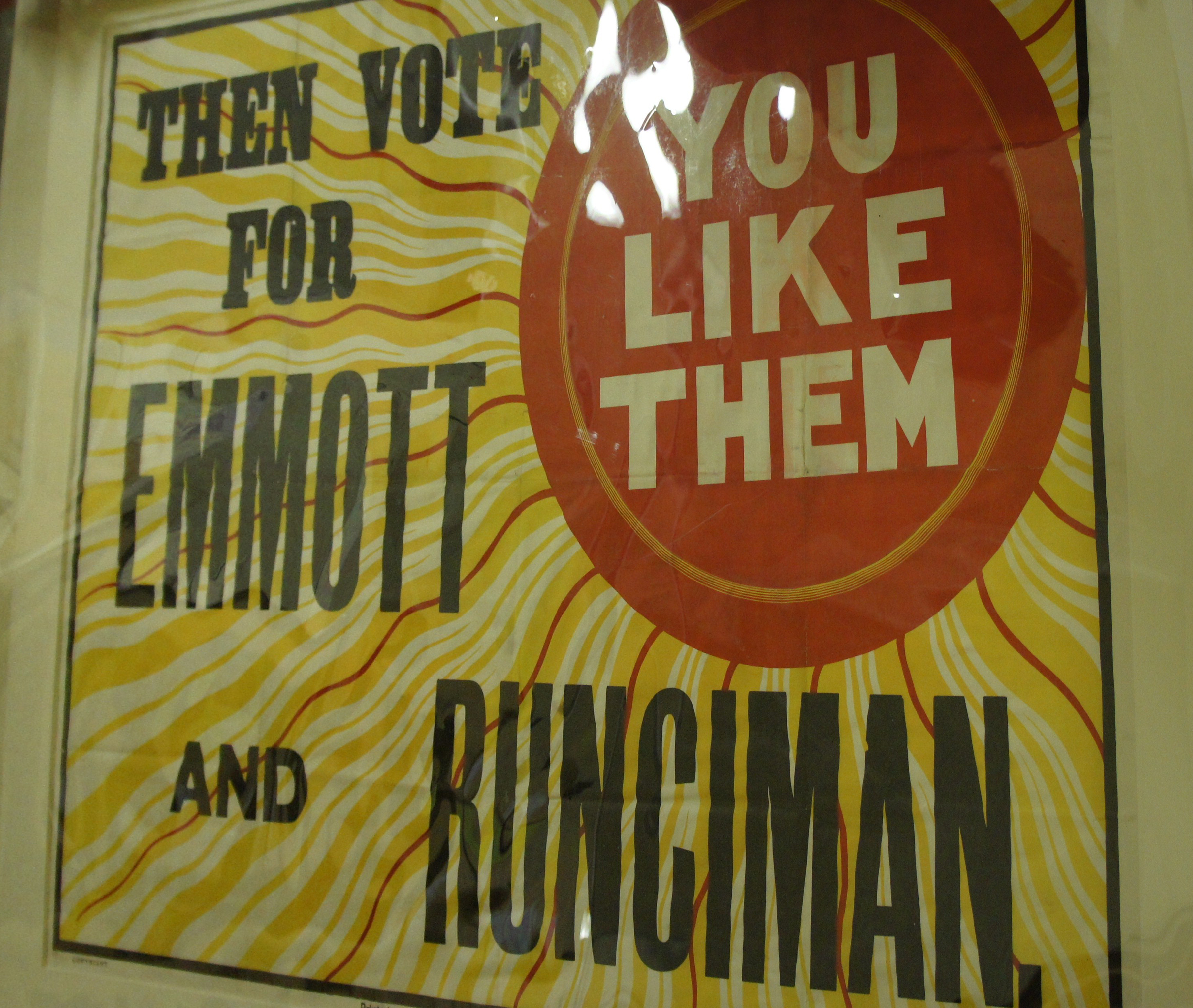
You Like Them Then! Vote for Emmott and Runciman
Alfred Emmott and Walter Runciman were the Liberal candidates who fought the Conservatives Winston Churchill and Charles Crisp for the two Oldham seats during the 1900 election. Unlike many of the surviving posters from that election this is highly colourful. Also while most political posters looked like political cartoons this is more like a commercial advert, with its simple slogan and uncomplicated image. The sun motif is one that remained in political posters until the present day.
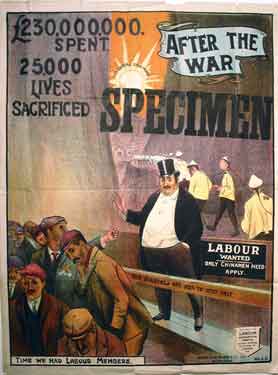
After the War
James Ramsay MacDonald then secretary of the Labour Representation Committee ordered this poster in 1904. On your right you can see the letter that he sent to the printers, requesting the image. The similarities between MacDonald’s order and the final poster are striking. During the 1910s senior Labour figures decided exactly what posters they wanted and had them produced. This differed from the Liberal and Conservative parties, who generally relied on the famous cartoonists and poster artists they employed to think up their posters.
The Workers Burden
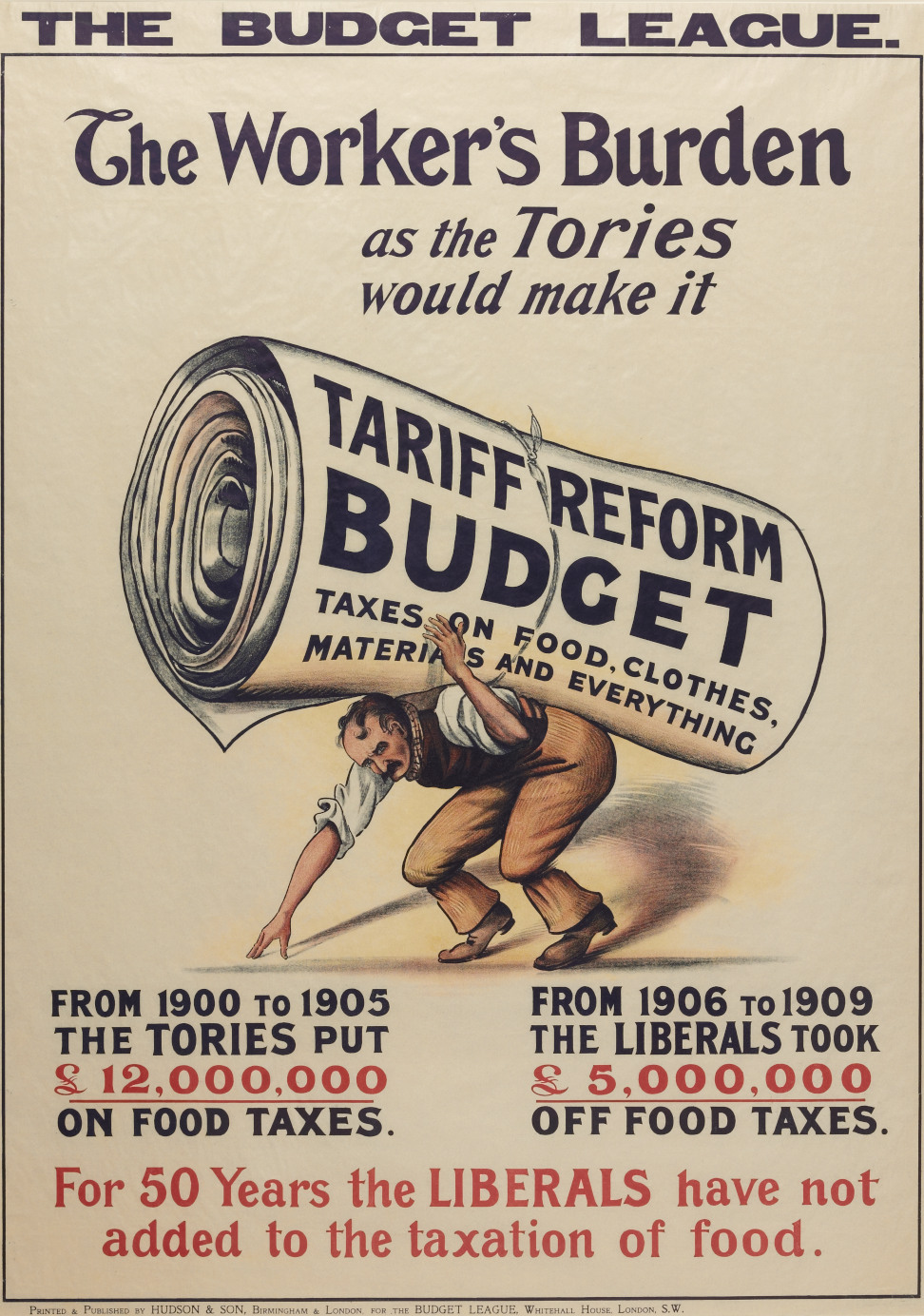
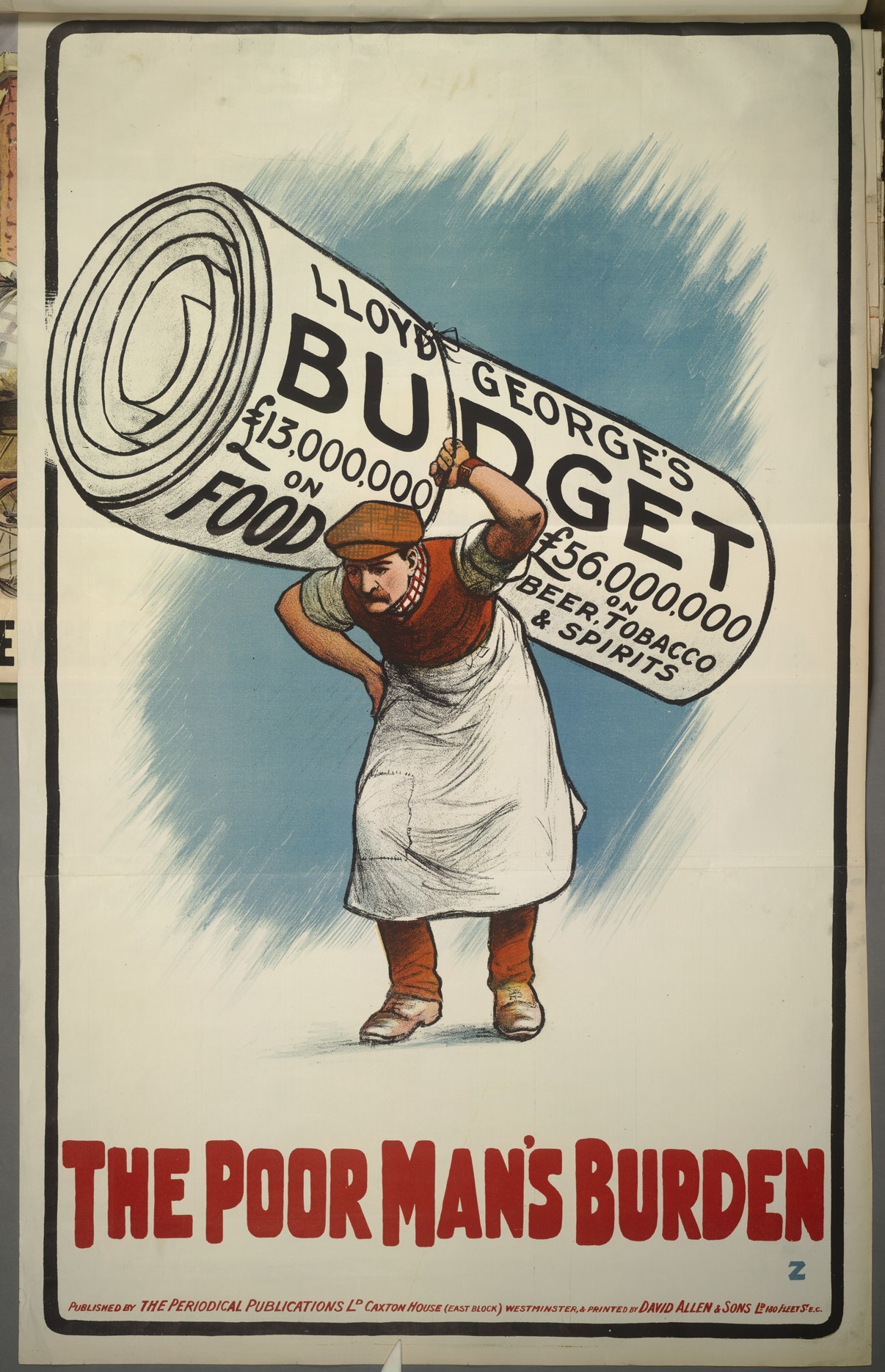
Two rival organisations issued this and the poster on its left in late 1909. A Liberal pressure group, the Budget League produced the example above, while the Liberal group the Budget Protest League was responsible for the other. The Times newspaper stated that The Worker’s Burden was a “reply” to the Poor Man’s Burden. Both posters use the same symbols, but the words change the meaning. In Edwardian Britain (1901-1910), posters were not static deliverers of information. They contested the politics of the street. Poster artists relied on the political education of the electorate to grasp these complex conversations.

The Poor Man’s Burden
The Only Hope is Tariff Reform
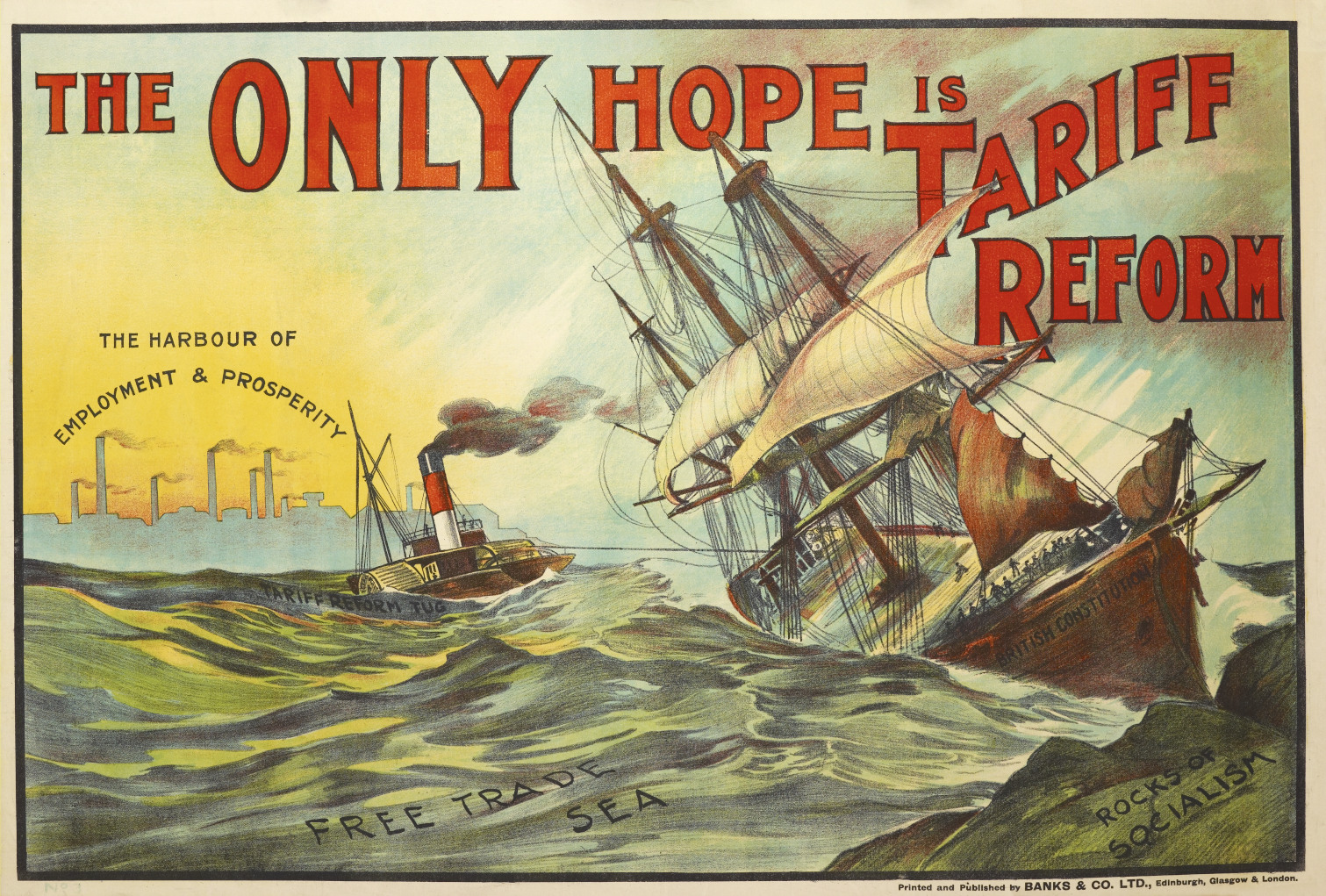
Tariff Reform refers to the taxing of imports into Britain. It was a major issue during the Edwardian period (1901-1910). The artist of this poster has used a number of symbols to emphasise the benefits of Tariff Reform. The tug of Tariff Reform is pulling the British Constitution off the rocks of socialism in the turbulent seas of Free Trade. The poster represents Britain twice. Its history as a sea fairing nation is evident in the ship. British industrial might is in the background as the sun rises over the smoking chimneys. As in many posters of the period the meaning was created through the combination of slogan and labelled image.
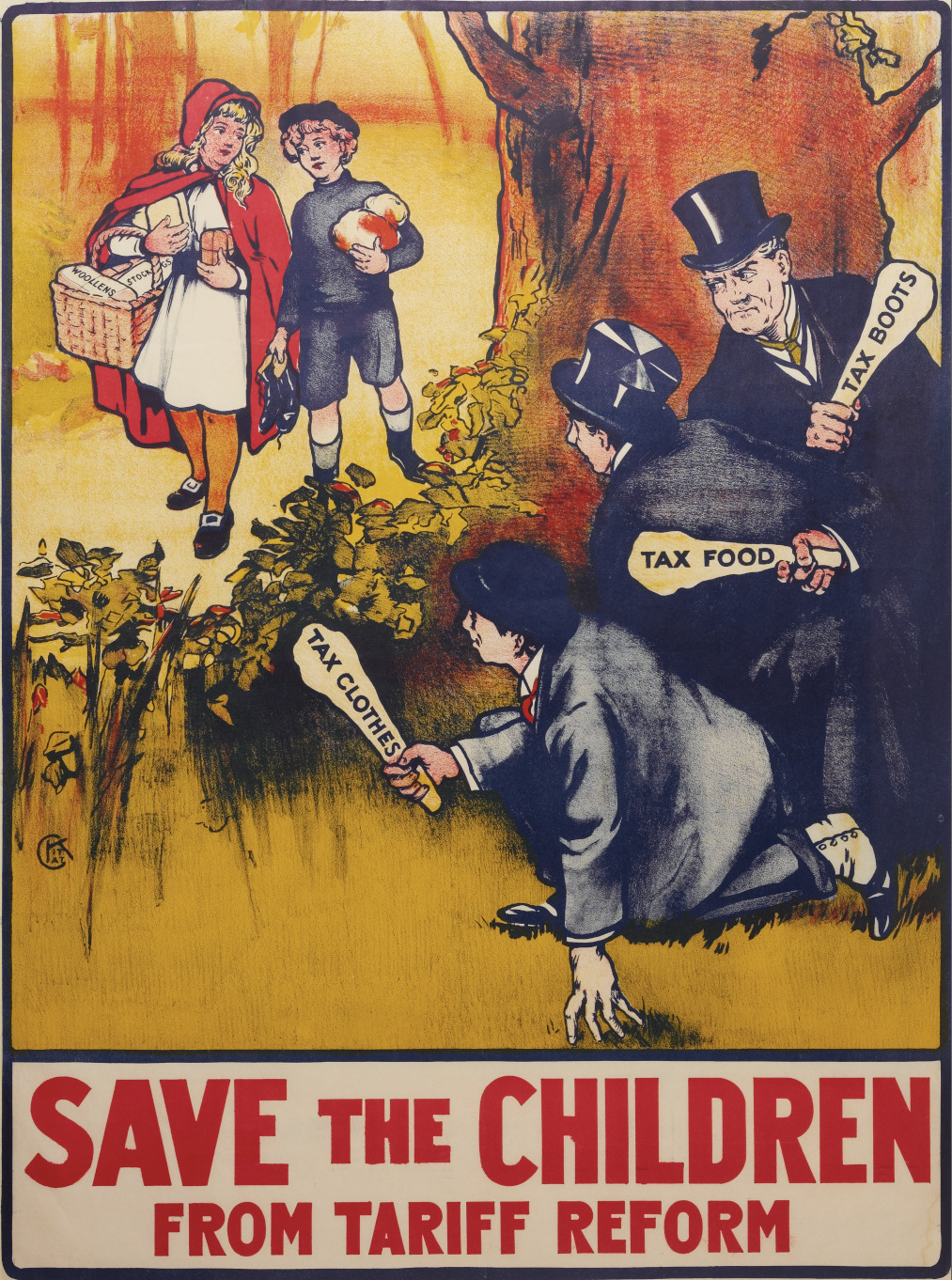
Save the Children from Tariff Reform
The Glutton
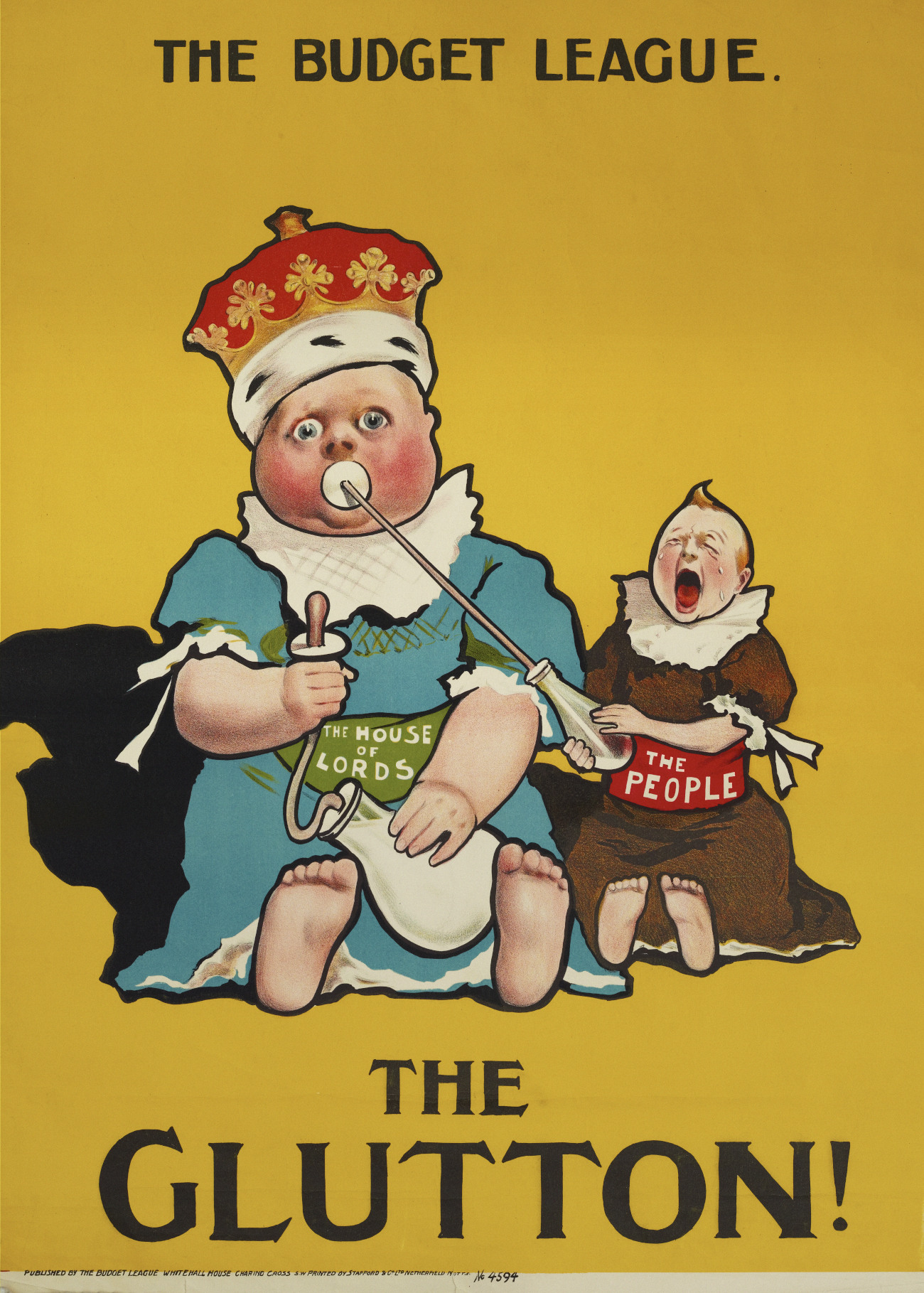
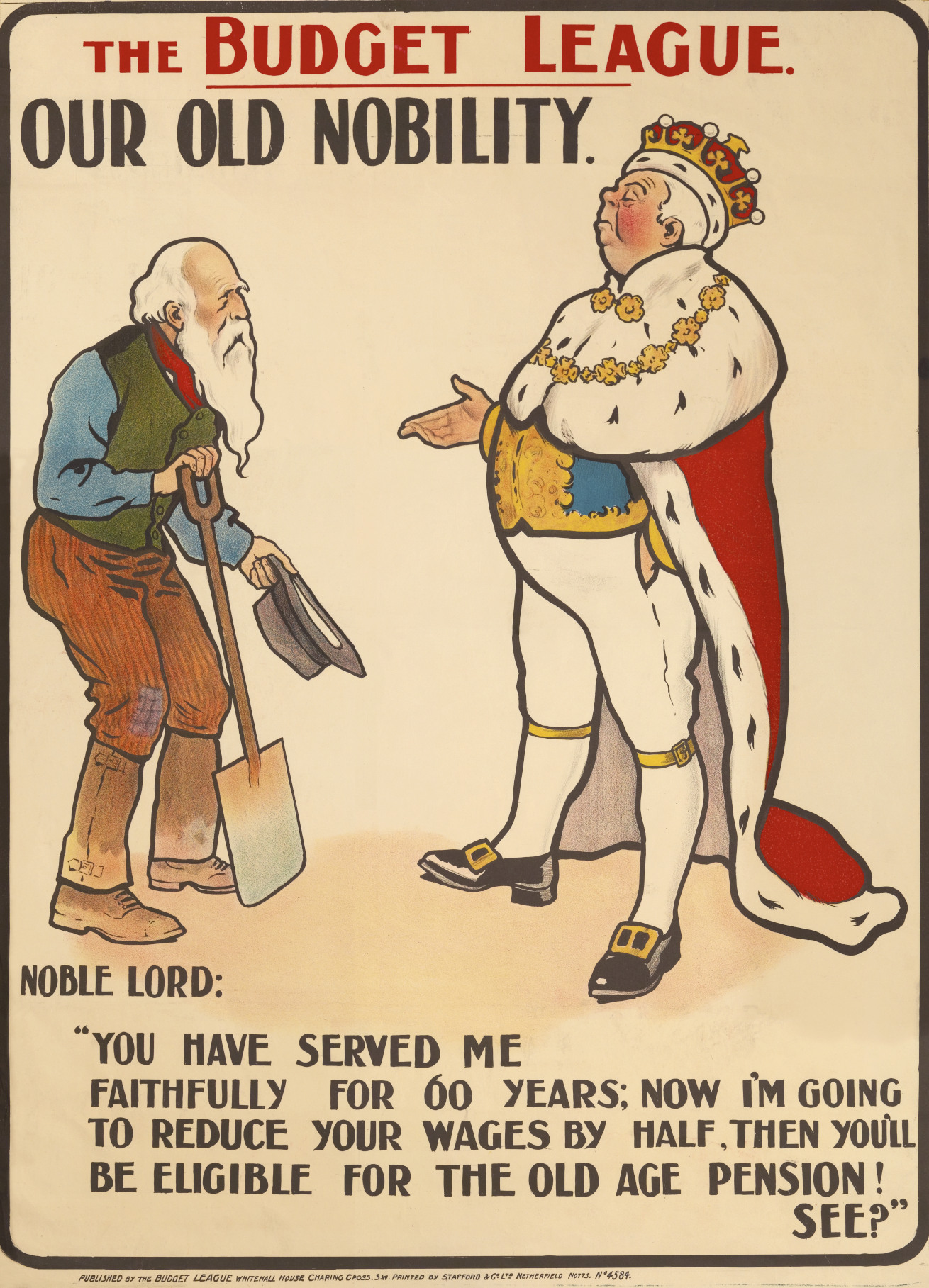
In 1910 Liberal and their allied Budget League posters attacked members of the House of Lords. As British Liberal Prime Minister David Lloyd George made regular reference in his speeches to the idle Lords. The posters regularly showed the Lords to be lazy unwilling to remove their hands from their pockets to help. It was the vice of greed, however, upon which opposition billboards focussed their most virulent attacks. Here the expertly drawn piggy eyes and red face of the milk stealer conveys the image of a figure that was full but still demanded more.
Our Old Nobility
The Land Needs Labour
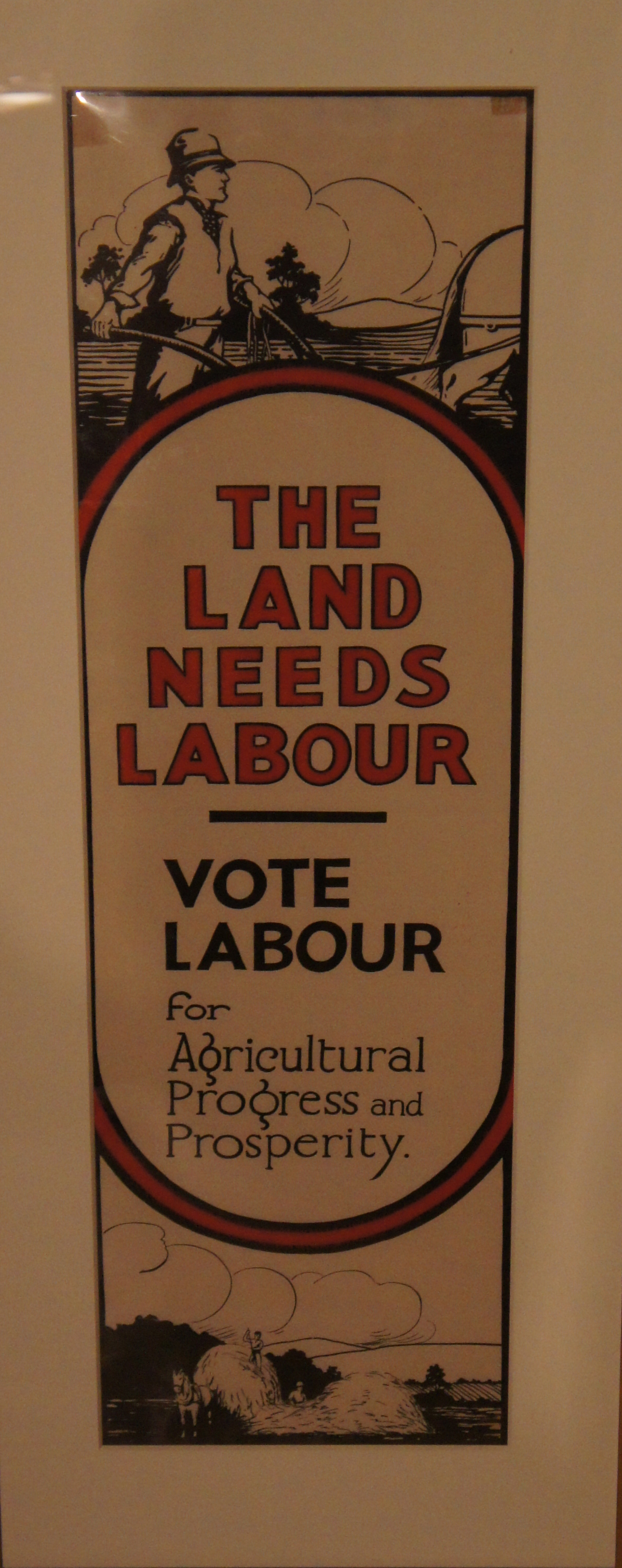
Posters are mainly urban forms of communication. This is because there were very few billboards of the type found in towns, in the countryside. In these rural areas parties had to find other places to stick their posters. These included in people’s windows, on the walls of their houses if they were willing, or on specially constructed boards in gardens. Gate posts or pylons offered other possibilities. These odd locations are one possible reason why posters intended for the countryside were often different shapes than those meant for urban landscapes.
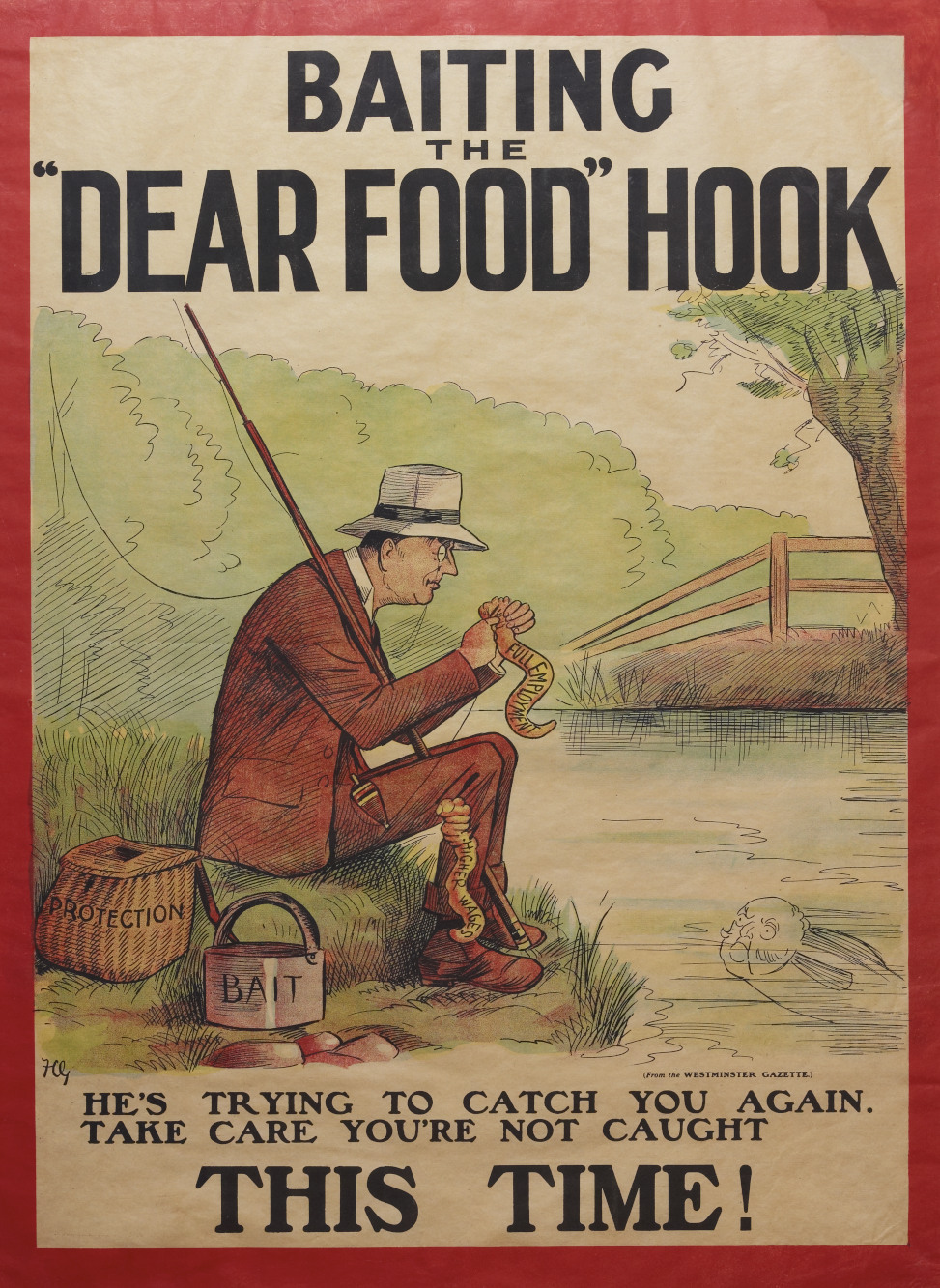
Baiting the ‘Dear Food’ Hook
The figure in this poster is Joseph Chamberlain. Francis Carruthers Gould, the artist made sure that viewers understood this by depicting him with his distinctive monocle. Chamberlain was in favour of Tariff Reform, and believed that if imports were taxed there would be more employment and higher wages. Carruthers Gould argues, that is merely to attract you, the viewer, and the real outcome is higher prices. The fishing apparatus, the creel and the bait can, are labelled with his true motifs, protection and bait. Fishing was a popular metaphor in posters. The idea that parties were tricking voters into acting a certain way, was highly relevant during election periods.
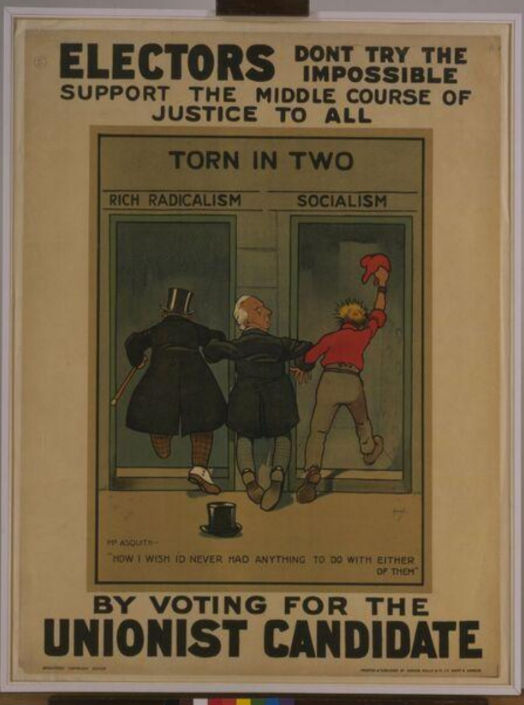
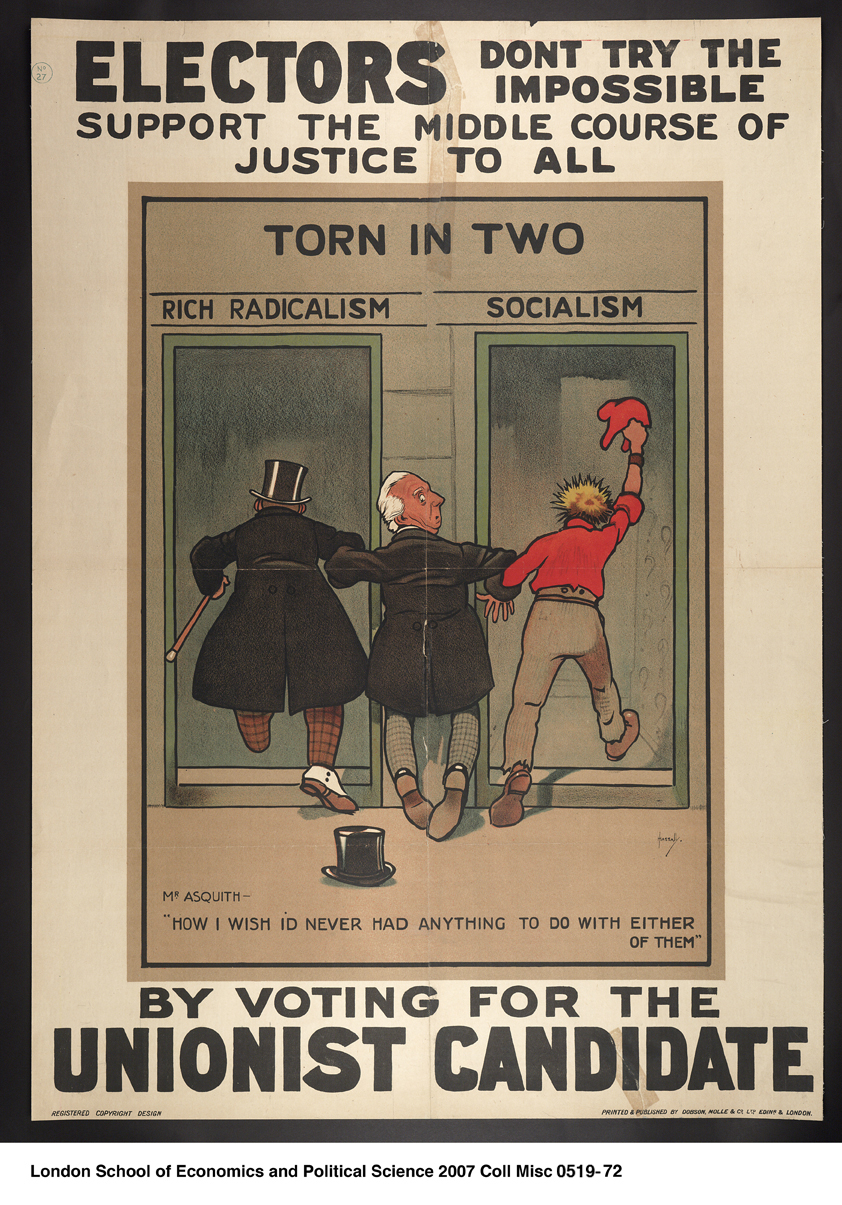
Electors Don’t Try the Impossible
In this poster the artist John Hassall suggests that the electors should not support the Liberals who were crippled by trying to accommodate the wishes of their rich capitalist members and the Labour party. The Liberal Prime Minister H.H. Asquith is in the middle, confused by the two competing sides. The Conservatives would have approved design from a sketch, probably the one on the right. Hassall would then have produced the finished poster, which he then sent to the printers. He completed this example on the 8th October and charged £25.00 for the design.
It’s Labour vs the Rest
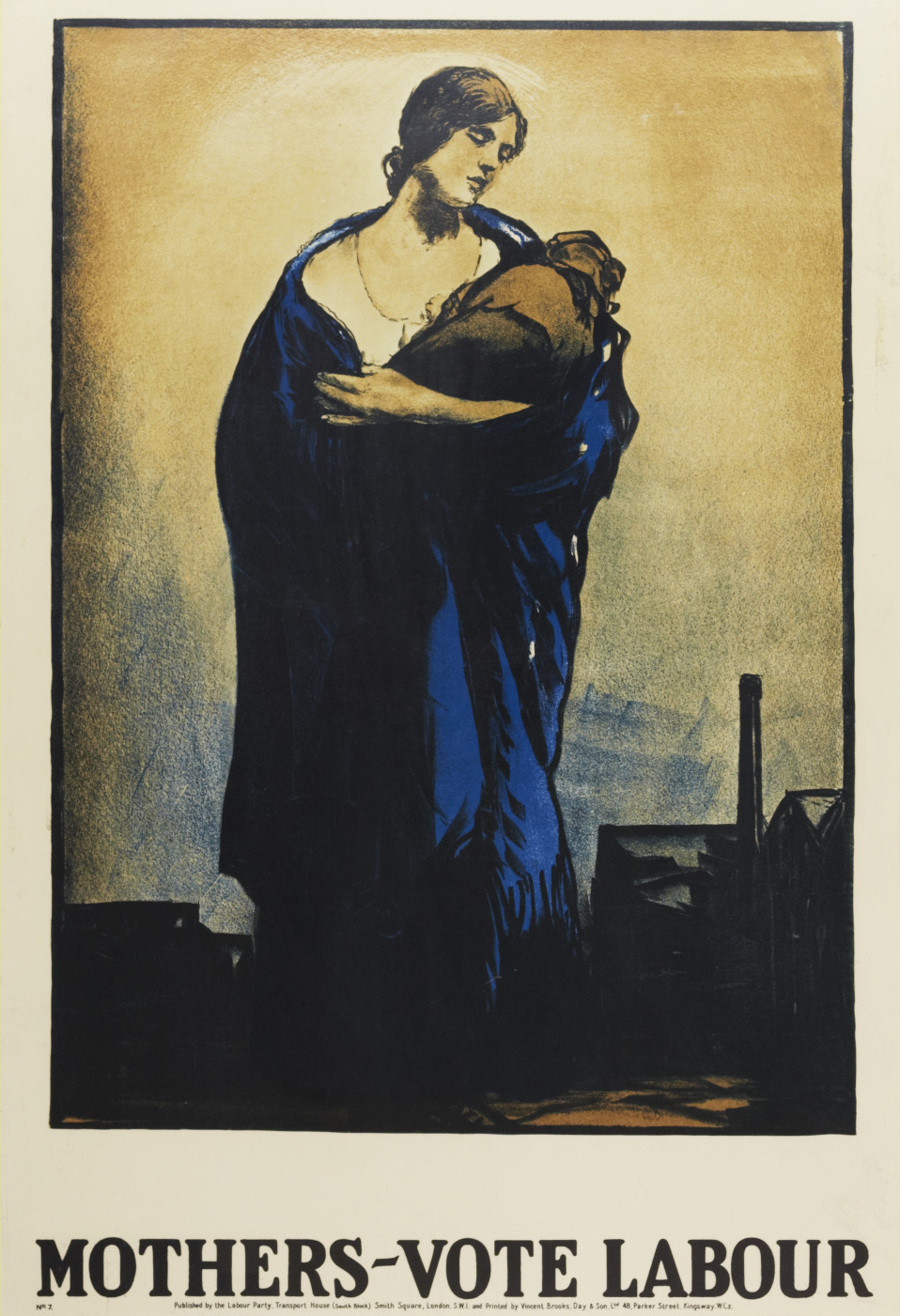
Mothers Vote Labour
Women could first vote in parliamentary elections 1918. This poster, designed by Gerald Spencer Pryse, is Labour’s first attempt to attract these new voters. During the period, Labour Party support came primarily from industrial areas, emphasised by the factory in the background. The basis of the poster’s appeal is that women should vote Labour on behalf of their children. Labour reissued this poster several times throughout the inter-war period, including in 1929, the first election men and women voted on equal terms.
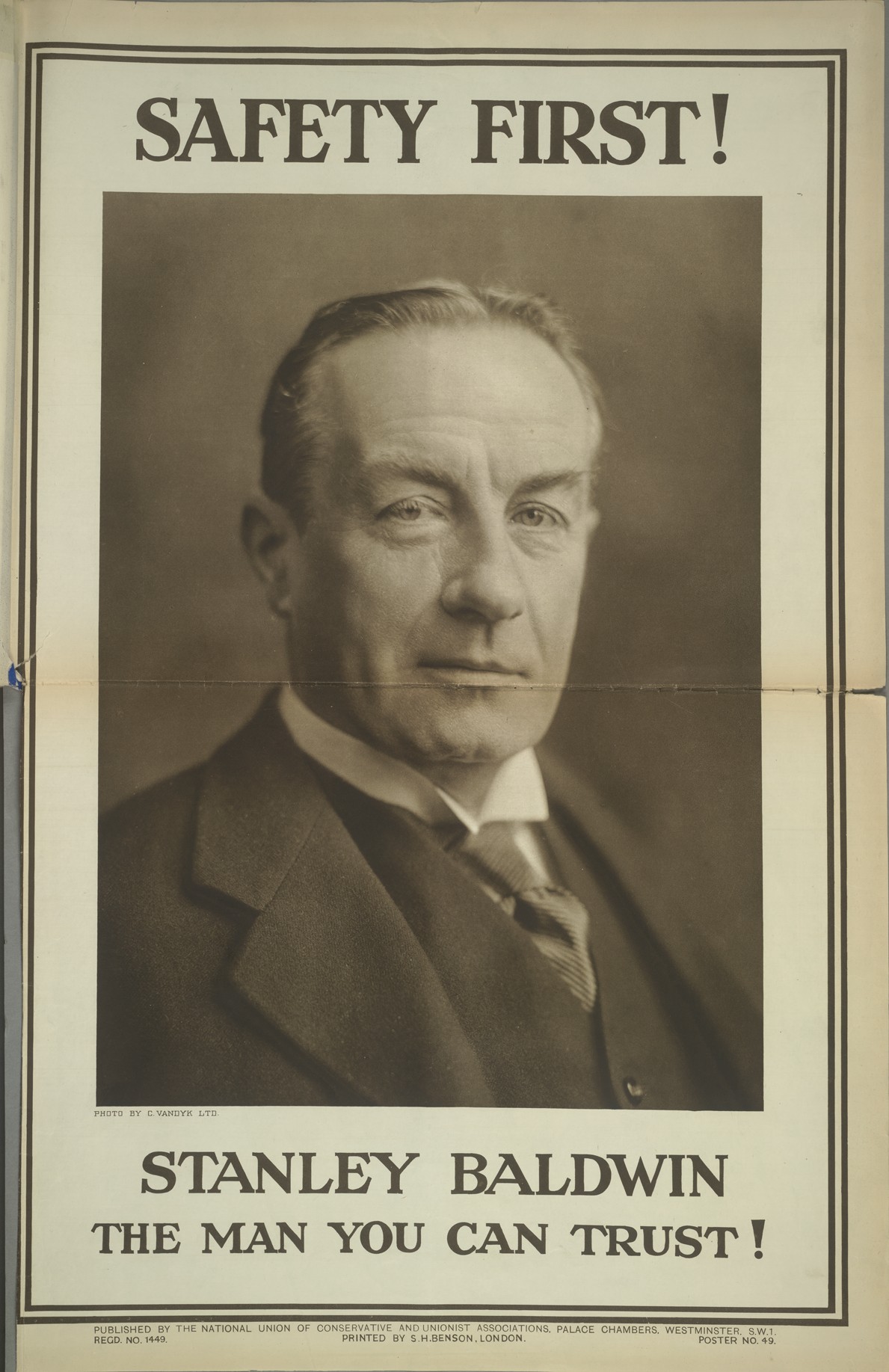
Safety First
The idea of trust is central to this poster. Clearly it says so at the bottom, but even if it did not the image of Conservative Prime Minister Stanley Baldwin is full of trustworthy symbols. Upright, solid, formal it is every inch the image of inter-war leadership. The most important signal of the Baldwin’s trust, however, is his gaze. Plato suggested “the eyes are the windows to the soul”. Baldwin’s unwavering stare signifies that he is not unnerved by the task of leadership. This poster ultimately suggests that Baldwin has nothing to hide.
General Manager Wanted
I am Voting Labour
Secure Industrial Prosperity
Men and Women Workers, Your Chance at Last
Labour Stands For All Who Work
Picturing Politics - The British Political Poster
Snicket
Political parties have used posters to speak to the people during
elections of the 20th and 21st centuries. In some form, posters
have survived despite the birth of radio, television, and the internet.
As the events of elections fade from our collective memory posters
have remained a lasting visual inheritance. This exhibition explores that
legacy. Starting with late Victorian examples it ends with posters from the
2010 election.
Posters here tell us that what seems politically ‘new’ is not. That our understanding of politics is dependent on a series of constantly evolving set of symbols. And that posters are the point where are and politics and meet.
Before 1929: The Arrival of Picture Politics
In the latter half of the 19th century technological
development enabled the printing of large colour posters. Political parties
often commissioned leading cartoonists to produce their posters. Consequently,
early picture posters looked very like contemporary cartoons. Like all political
cartoons they were frequently deeply cutting about rival parties.
Despite the spread of picture posters many were just text, crude and locally produced. Just as they had been throughout the 18th and 19th centuries.
Irishmen! Party: Conservative Election: 1900 (Conservative victory)
You Like Them Then Vote for Emmott and Runciman Party: Liberal Election: 1900 (Conservative victory)
After the War Party: Labour Representation Committee (became the Parliamentary Labour Party in 1906) Election: Possibly used in the election of 1906 (Liberal victory)
The Worker’s Burden Party: Budget League (supported the Liberals) Election: January 1910 (Liberal Victory)
Party: Budget Protest League (supported the Conservatives) Election: January 1910 (Liberal Victory)
Party: Conservative Election: 1906? (Liberal Victory)
The Poster Elections of 1910
There were two elections in 1910, in January and December. There were probably more posters in these elections than any before or since. During the January election alone posters covered over two million square feet of wall space in London.
Poster designers drew on a rich language of symbols to translate arguments into pictures. Voters were often depicted as children, perhaps to suggest their vulnerability. A loaf of bread symbolised free trade. The shopping basket represented the price of household goods. Top hats were the sign of wealth or privilege. Each of these two posters contain one or all of these symbols.
Party: Free Trade Union (supported the Liberals) Election: Probably January 1910 (Liberal victory)
Party: Budget League (supported the Liberals) Election: January 1910 (Liberal victory)
Party: The Budget League (supported the Liberals) Election: January 1910 (Liberal victory)
Party: Labour Election: Possibly 1924 (Conservative victory)
Sir Francis Carruthers Gould (1844-1925)
Gould was a cartoonist, illustrator and painter. He first worked as a stockbroker, but quit in 1888 to become a fulltime caricaturist. He was a Liberal Party supporter.
Many of the cartoons Gould drew for the Westminster Gazette, were made into Liberal posters for the 1906 election. He was knighted for his work following the Liberal victory that year.
Gould argued that the public were more likely to accept ideas in the form of pictures than those that were written down. Arguably this idea has been central to parties’ use of posters during the 20th century.
Party: Liberal Election: 1906 (Liberal victory)
John Hassall (1868-1948)
John Hassall was an illustrator, cartoonist and poster artist. He was one of the leading commercial artists of his day. Hassall produced posters for Colman’s mustard, Kodak and famously Skegness Is So Bracing, for the London and North Eastern Railway Company.
His posters contained large areas of colour, bold outlines and were often humorous. During 1910 Hassall designed numerous posters for the Conservative Party and the Budget Protest League.
Hassall argued that:
"A successful poster must be as sparing of words as a good political cartoon; its action, not its explanatory wording, for the most part tell the story."
Party: Conservative Election: January and December 1910 (Liberal victory)
Party: Labour Election: 1924 (Conservative victory)
Gerald Spencer Pryse (1882-1956)
Spencer Pryse was the Labour Party’s most prolific poster artist during the first half of the 20th century. James Ramsay MacDonald recruited Pryse to design posters for Labour sometime before 1910.
During the war he produced government recruiting posters. The success of these led Churchill to offer Pryse a job as poster artist for the Conservatives.
A committed socialist he rejected the offer, and continued to design posters for Labour until the 1930s.
In his own words he was:
“...sensitive to the need for substantial advancement in the position of the working population, who it seemed to me had been given a raw deal in an industrial age.”
Mothers Vote Labour Party: Labour Election: First used 1918
1929-1950: Women and Leaders
After gaining the equal franchise in 1928 women could vote on the same terms as men. Parties used posters to appeal to the new young female electorate.
Women had always appeared in posters but after 1928 they began to feature more prominently in designs. The 1929 election marked another change in poster design as parties began to use posters to promote their leaders.
Before 1929 if party leaders appeared it was usually the posters of their rivals to be attacked and ridiculed.
Safety First Party: Conservatives Election: 1929 (Labour victory)
General Manager Wanted Party: Labour Election: 1929 (Labour Victory)
Leaders: Presidential Politics
The British media often criticise political parties for presenting their leaders like Presidents. In 1997 there was talk of ‘President Blair’ and again in 2010 with David Cameron. However, since the 1920s parties have used posters to promote their leader.
Even in the 1890s the Liberals were using the popularity of Gladstone to promote their local candidates.
Parties built trust in charismatic leaders to win popular votes, because building trust in political parties was much more difficult. Political posters of the 1920s depicted leaders as upright, trustworthy and statesmanlike.
More recently they are portrayed as casual and approachable. This reflects the way British politics has become far more informal during the 20th century.
I am voting Labour Party: Labour Election: 1929 (Labour victory)
Secure Industrial Prosperity Party: Labour Election: 1929 (Labour victory)
Gender Stereotypes
Posters often depicted men and women in their traditional roles. Women were shown as wives and mothers. Men were assigned the role of paid workers or the family breadwinner.
During the late 1920s and 1930s Labour produced the first posters which appealed to the millions of women in paid employment. But this was something of an anomaly. After World War II posters reverted to traditional stereotypes despite the millions of women still in work following the war.
The failure to acknowledge women’s role as contributors to Britain’s workforce suggests that parties believed that women would vote as wives and mothers. And potentially that posters depicted not how women were but how parties wanted them to be.
Men and Women Workers, Your Chance at Last Party: Labour Election: 1929 (Labour victory)
Party: Labour Election: Perhaps 1931 (National Government victory)
The Sun
As long as humans have drawn images the sun has been a positive symbol. It is one of the most frequently occurring symbols in political posters. It has a double meaning. Light is the giver of life, and the image of the dawn represents new beginnings.
This links neatly with General Elections which offer the opportunity elect a new party who could promise a brighter future.
1950-1979: More Photos, Less Drawing, Fewer Words
By 1950 the tradition of cartoonists and artists drawing posters had largely disappeared. Detailed artwork was largely replaced by a more graphic style.
A standard format developed. A bold image in the centre, accompanied by a pithy slogan. Photographic posters became the norm, rather than the exception.
Furthermore during this period posters began to attack the opposition less and concentrate on their own parties and leaders.
Shopping Basket
The price of household goods has been a key election issue since the early 19th century. Throughout the 20th century posters used the shopping basket symbol to represent these goods. Shopping and domestic budgets were considered a woman’s occupation. So predictably the person holding the shopping basket in posters was always female.
Intriguingly baskets featured in posters before women had the vote. The imagery was aimed at men who were expected to represent the concerns of the whole family at the ballot box.
The Political Pipe
Such was Harold Wilson’s fame as a pipe smoker, people who saw the poster on the left would instinctively know that the pipe represented him.
Conservative Stanley Baldwin and Labour’s Clement Attlee, were also famous pipe smokers. All three appeared in posters holding a pipe.
Pipes were used as a symbol of trustworthiness. And pipe smokers were meant to be seen as sensible, thoughtful and dignified leaders. Pipes had an old-fashioned quality which enhanced the idea of trust.
They perhaps harked back to a ‘better’ age. Such posters also demonstrates the power of images to overcome truth. Wilson actually preferred the more aristocratic cigar.
After 1979: Labour Isn’t Working and its Aftermath
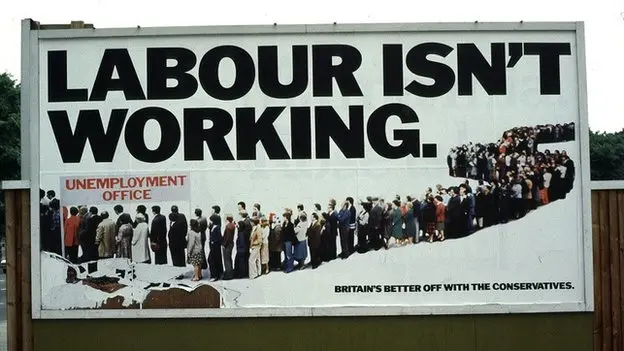
Since 1979 the media has judged all posters against the Conservatives’ example Labour Isn’t Working. During the 1980s and 1990s the advertising agency Saatchi and Saatchi produced several high impact designs for the party.
These included Labour’s Double Whammy and Labour’s Tax Bombshell. Labour also developed greater skill in political advertising during this period.
Just as technology was becoming more advanced, the traditional satirical attacking poster had a renaissance.
Satire
Many of the posters in this exhibition use satire or humour to make their point. They ridicule or exaggerate the figures within. Looking back at the posters on display, it is clear that satire in posters was common before 1914, becoming less so in the inter-war period.
During the 1940s and 1950s humour was even less evident than it had been. This could have been due to the austerity of the post-war world and because opposition parties were rarely mentioned.
During the 1970s, 1980s and 1990s humour, satire and caricature, returned to the poster with a vengeance.
Colour
Blue for Conservatives, red for Labour, yellow for the Liberal Democrats and green for the Green party.
These colours have themselves become distinctive symbols of the parties. Despite the association between party and colour, there is no systematic use of party colour in posters.
Up until the 1970s local party organisations often had their own traditional party colours. For instance in 1950 Conservative organisations in two constituencies of Norfolk used the colours orange and purple. And the Newcastle Labour party used green until the 1980s.
Do Posters Work?
Although they have been used in every election of the 20th century, what affect posters actually have is hotly debated. A study in 2001 claimed posters made no impact on voters choices.
It certainly seems unlikely that after seeing a poster on the street voters immediately convert to a particular party. Have you?
More likely posters convince those already wavering, but who are not quite sure. They might even demonstrate to decided voters that their party of choice is doing all it can to win. In recent elections parties have used poster launches to generate photo opportunities and in this role they have been an undoubted success.
In all probability posters work on some people some of the time.
Exhibition Quiz:
None